

Quick Commerce Ads: Why Users Click and Convert Instantly
Unlocking the Psychology Behind Quick Commerce Ads
In today’s fast-paced digital world, Quick Commerce Ads (or Q-commerce ads) have completely redefined consumer engagement. Built around the promise of instant delivery and convenience, these ads tap into deep psychological triggers that influence decision-making. Understanding why users click and convert instantly helps brands design smarter campaigns that connect emotionally and convert efficiently.
The Psychology of Quick Commerce Ads
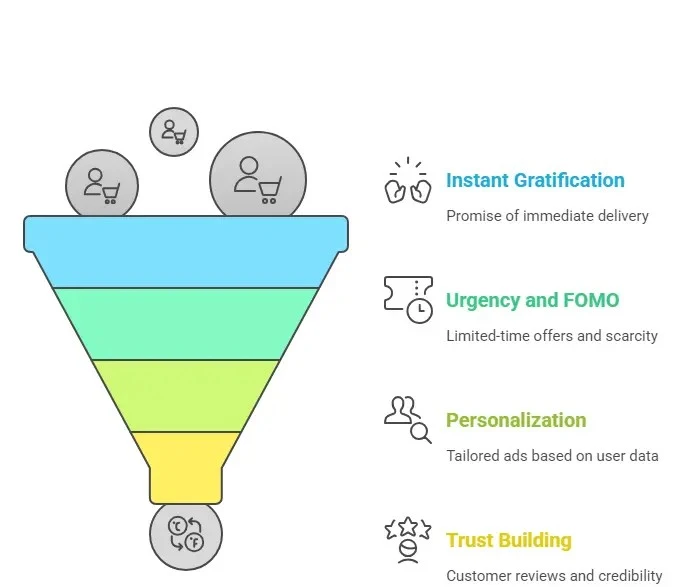
1. Instant Gratification and Reward Loops
Consumers have grown accustomed to immediacy. from streaming content to same-day delivery. Q-commerce ads leverage this craving for instant gratification. The promise of receiving an item within minutes activates the brain’s dopamine response, creating a rewarding anticipation that encourages immediate clicks.
2. Urgency and Fear of Missing Out (FOMO)
Limited-time offers, “only a few left” messages, and countdown timers tap into the human fear of missing out. The urgency triggers quick decision-making, bypassing rational hesitation. In the context of quick commerce, where delivery itself is instant, this sense of speed perfectly aligns with the ad’s emotional tone, fast, exciting, and rewarding.
3. Personalization and Relevance
Modern quick commerce ads use AI to personalize messaging based on browsing history, purchase intent, and geolocation. When users feel an ad “understands” their lifestyle, for example, showing a coffee offer during their usual morning order window, they’re far more likely to engage.
4. Trust and Social Proof
Trust is central to conversion. Brands that highlight customer reviews, delivery reliability, or influencer recommendations instantly build credibility. In an environment where speed matters, trust eliminates doubt, making the “Buy Now” click effortless.
Understanding Who Clicks on Quick Commerce Ads
The Impulsive Shopper
Thrives on instant gratification and loves one-tap purchases. Perfect for limited-time deals and fast delivery promises.
The Tech-Savvy Consumer
App-native, data-aware, and expects seamless ad experiences that blend naturally with their digital behavior.
The Value Seeker
Drawn to time-sensitive discounts or “exclusive” offers that create urgency and excitement.
The Conscious Consumer
Prefers brands that align with sustainability, green logistics, eco packaging, or local sourcing often increase trust and conversions in this group.
Benefits of Quick Commerce Ads
1. High Conversion Rates
The combination of personalization, urgency, and trust drives immediate action, reducing the typical customer journey time.
2. Increased Engagement
Q-commerce ads integrate natively into the shopping flow, users often don’t perceive them as intrusive, boosting engagement.
3. Seamless User Experience
A smooth, two-click path to purchase reduces friction, ensuring users complete transactions quickly and effortlessly.
4. Emotional Resonance
By leveraging excitement, FOMO, and satisfaction, Quick Commerce Ads build emotional connections that last beyond a single purchase.
How to Create Compelling Quick Commerce Ads
- Lead with Emotion: Use bold visuals, urgent language (“Don’t Miss Out!”), and aspirational tone.
- Simplify the Flow: Reduce clicks, minimize steps, and ensure lightning-fast redirects to checkout.
- Leverage Social Proof: Display customer ratings or influencer mentions to establish credibility.
- Test & Optimize: Run A/B tests on CTAs, visuals, and timing to find what triggers maximum conversions.
The Best Time for Quick Commerce Ads
Timing is crucial, most Q-commerce platforms like Blinkit, Zepto, and Swiggy Instamart report peak user activity during:
- Morning (8 AM – 11 AM): Breakfast essentials, beverages.
- Afternoon (1 PM – 3 PM): Lunch-time convenience.
- Evening (6 PM – 10 PM): Snacks, dinner items, and impulse purchases.
Blinkit’s platform data (50M+ monthly users, ₹665 average order value) shows that post-checkout and order-tracking screens generate the highest engagement for ads.
FAQs About Quick Commerce Ads
1. What are Quick Commerce Ads?
They are ads placed within ultra-fast delivery apps that focus on instant gratification and speed-based buying behavior.
2. Why do users convert so fast?
Because of emotional and psychological triggers, urgency, reward anticipation, trust, and convenience.
3. Are Quick Commerce Ads effective for non-FMCG brands?
Absolutely. Even non-endemic brands (finance, education, lifestyle) can benefit from reaching highly engaged, purchase-ready audiences.
4. How can I measure ad success?
Through CTR, conversion rate, AOV (average order value), and time-to-conversion metrics tracked via ad dashboards.
Conclusion: The Science of Speed
The secret to Quick Commerce Ads lies in psychology, understanding how emotion, trust, and urgency drive action. By combining these triggers with data-driven personalization and real-time delivery models, brands can create ads that not only attract clicks but also inspire loyalty.
In a world where attention spans are shrinking and speed defines value, mastering the psychology behind quick commerce advertisement isn’t optional, it’s essential for growth.

Karan Sachdeva
